Choosing Flooring for Dubai Villas: Heat, Humidity and Material Tradeoffs
Selecting flooring for a villa in Dubai means accounting for high ambient temperatures, intense solar exposure, and periods of elevated humidity. This guide reviews material properties, maintenance steps, and practical questions to ask suppliers so you can choose a floor that performs under Gulf climate conditions.
Contents
- Which flooring materials resist warping in Dubai villa climates?
- Does direct sunlight fade engineered wood faster than porcelain in Dubai?
- What are the thermal expansion tradeoffs between tile and wood flooring?
- How do Dubai building codes regulate interior flooring materials?
- Which flooring installation methods prevent moisture failure in Dubai?
- What maintenance routines preserve flooring under Gulf climate conditions?
Key takeaways
- Warping occurs when a material absorbs heat or moisture unevenly.
- The approved source records do not contain comparative UV-fading data for engineered wood versus porcelain tile.
- Thermal properties determine how much energy a floor absorbs and how it transfers heat.
- The heading implies that this article can summarize Dubai-specific building code requirements for interior flooring.
- Moisture control prevents flooring failure.
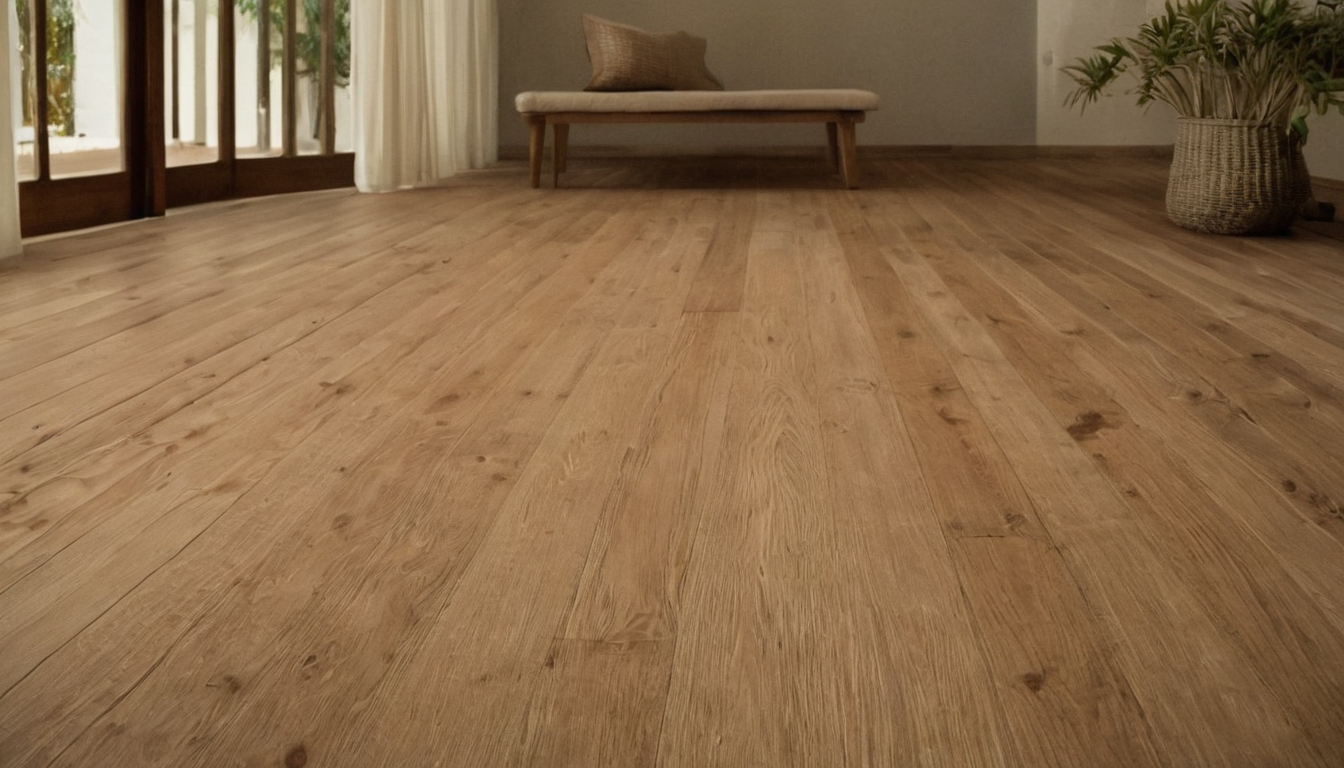
Choosing Flooring for Dubai Villas: Heat, Humidity and Material Tradeoffs.
Which flooring materials resist warping in Dubai villa climates?
Warping occurs when a material absorbs heat or moisture unevenly. Engineered hardwood flooring consists of a thin layer of hardwood on top of premium plywood; tested samples show a density of 760 kg/m³ and a board thickness of 0.32 cm (FSRI). Under extreme heat exposure during cone calorimeter tests at fluxes of 25 kW/m², 50 kW/m², and 75 kW/m², engineered hardwood warped into an arched shape during the decay phase, which required tie wires to prevent movement during testing (FSRI). Those test conditions exceed normal indoor environments, but they demonstrate that engineered wood is susceptible to deformation under sustained high thermal loads.
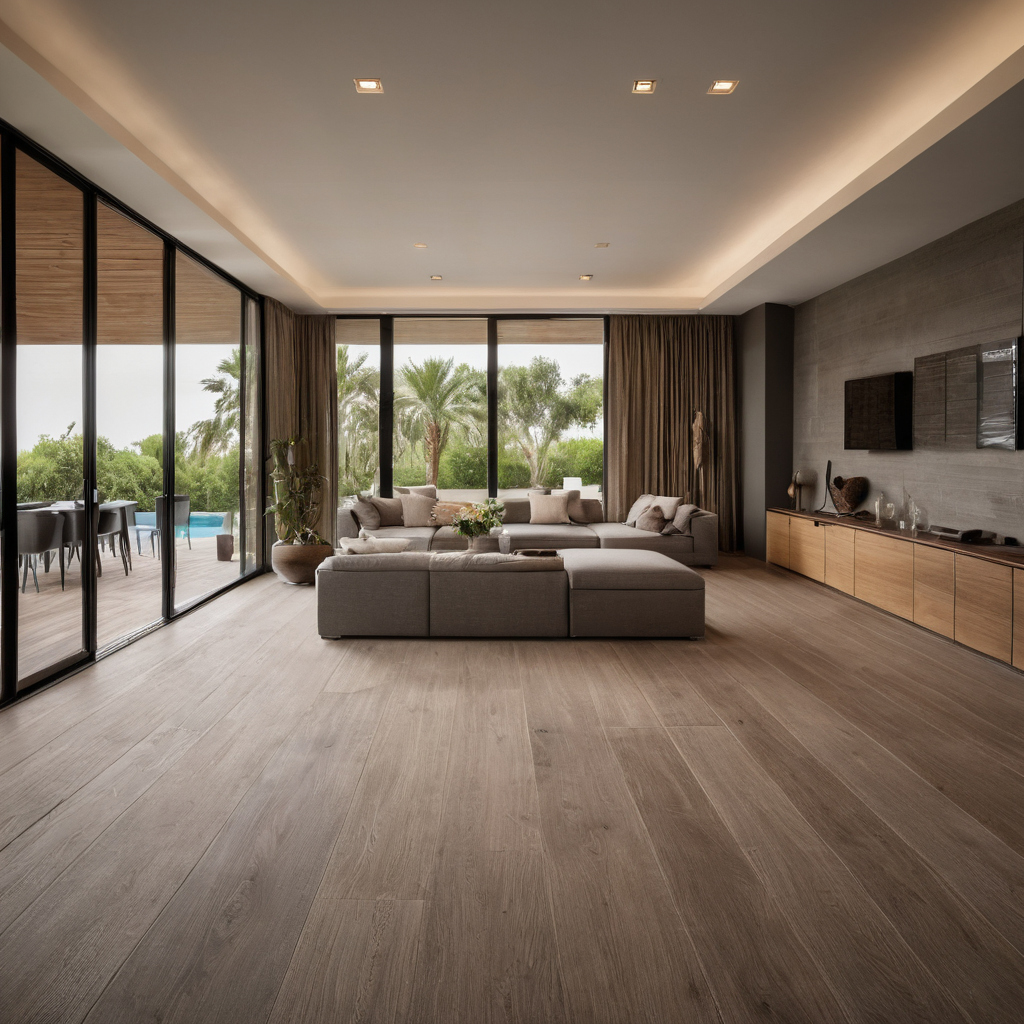
Which flooring materials resist warping in Dubai villa climates.
To reduce warping risk, ask your flooring supplier for dimensional stability data measured at temperatures above 40°C and relative humidity levels typical of Gulf summers. Request written installation tolerances specific to your villa's slab conditions.
Does direct sunlight fade engineered wood faster than porcelain in Dubai?
The approved source records do not contain comparative UV-fading data for engineered wood versus porcelain tile. Rather than rely on general assumptions, take these concrete steps before purchasing:
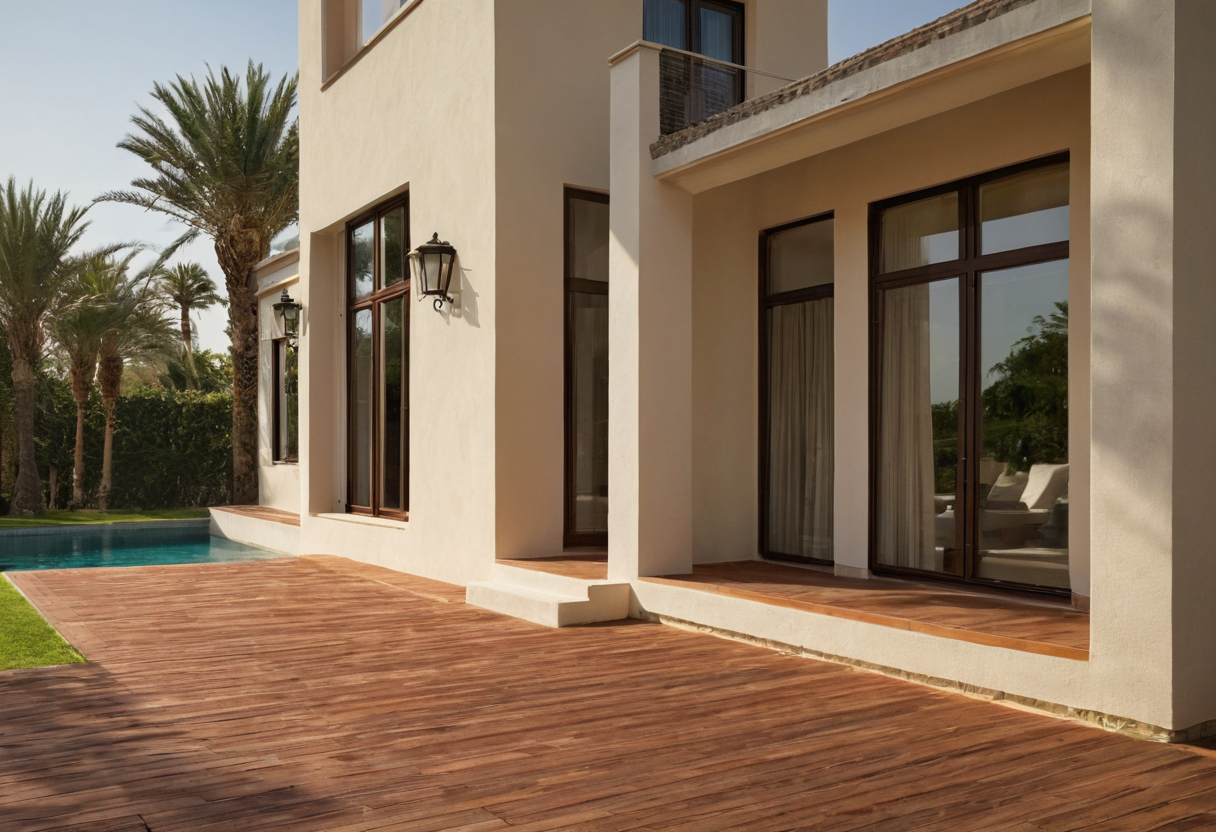
Does direct sunlight fade engineered wood faster than porcelain in Dubai.
- Ask the manufacturer for accelerated weathering test results (such as xenon-arc exposure) for both the surface finish of the engineered wood and the glaze of the porcelain.
- Request lightfastness ratings for any pigments, stains, or coatings applied to the wood veneer.
- Specify window treatments with documented UV-blocking percentages for rooms receiving direct sunlight.
What are the thermal expansion tradeoffs between tile and wood flooring?
Thermal properties determine how much energy a floor absorbs and how it transfers heat. According to FSRI measurements using a heat flow meter, unconditioned engineered hardwood has a specific heat of 1369.0 J/(kg K) at 10°C, 1445.0 J/(kg K) at 20°C, 1518.0 J/(kg K) at 30°C, and 1604.0 J/(kg K) at 40°C. The thermal conductivity of unconditioned engineered hardwood is 0.125 W/(m K) at 15°C and 0.134 W/(m K) at 45°C; dried samples show lower conductivity at 0.086 W/(m K) at 15°C and 0.093 W/(m K) at 45°C (FSRI).
These figures indicate that engineered hardwood stores more thermal energy as temperatures rise, and its ability to conduct heat increases slightly at higher temperatures. Drying the material lowers its thermal conductivity. The approved records do not provide corresponding thermal expansion coefficients or equivalent thermal data for ceramic or porcelain tile. To evaluate tradeoffs accurately, ask your supplier for the coefficient of linear thermal expansion for both the wood product and the tile you are considering, measured across the temperature range your villa experiences.
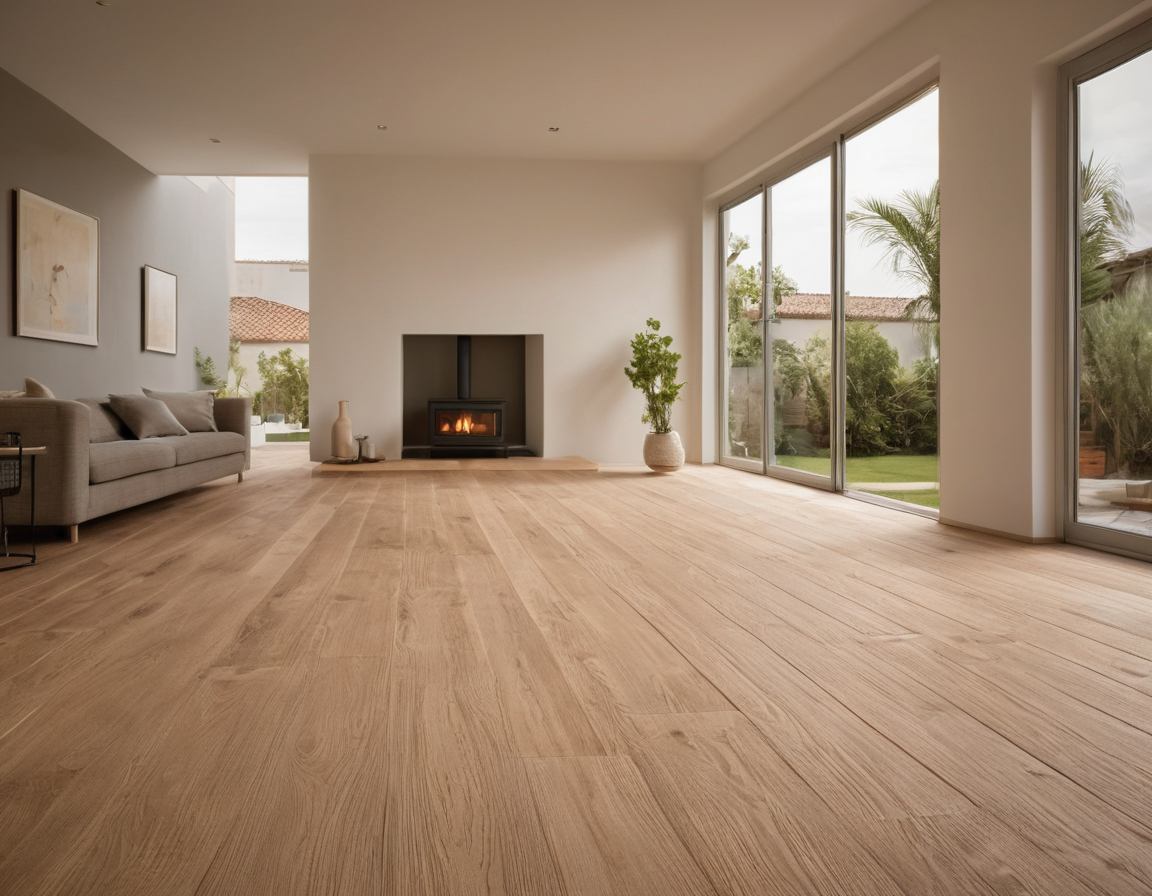
What are the thermal expansion tradeoffs between tile and wood flooring.
How do Dubai building codes regulate interior flooring materials?
The heading implies that this article can summarize Dubai-specific building code requirements for interior flooring. However, the approved source records do not contain information about Dubai building codes, municipal regulations, or local compliance standards for flooring materials. Presenting generic code advice as if it applies to Dubai would be inaccurate.
To ensure compliance, take these actions:
- Consult the Dubai Municipality or the relevant free-zone authority directly for current interior finish regulations.
- Ask your contractor to provide documentation showing that the proposed flooring system meets local fire-rating, slip-resistance, and emission standards.
- Verify whether the building management or homeowners' association imposes additional restrictions on flooring weight, sound transmission, or material type.
Which flooring installation methods prevent moisture failure in Dubai?
Moisture control prevents flooring failure. The U.S. Environmental Protection Agency states that condensation and wet or damp spots should be fixed promptly to prevent mold growth (U.S. EPA). This principle applies directly to subfloor preparation and ongoing climate control in villas where air conditioning cycles can create condensation on concrete slabs.
How do Dubai building codes regulate interior flooring materials.
Many installation products emit volatile organic compounds (VOCs). The U.S. Environmental Protection Agency identifies paints, varnishes, waxes, cleaning products, building materials, and furnishings as common indoor sources of VOCs, and recommends increasing ventilation when using products that emit VOCs indoors (U.S. EPA).
When planning installation, ask your contractor the following:
- What moisture testing protocol will be used on the concrete slab before installation?
- Which vapor barriers or moisture mitigation systems are specified, and what are their permeance ratings?
- What adhesives or sealants will be used, and what are their VOC emission profiles?
- How will ventilation be managed during and immediately after installation to clear VOC emissions?
What maintenance routines preserve flooring under Gulf climate conditions?
Maintenance routines must account for dust, heat, and the specific vulnerabilities of each material. For natural stone flooring, the Natural Stone Institute recommends cleaning surfaces with neutral cleaners, stone soap, or mild liquid dishwashing detergent and warm water. The Natural Stone Institute also warns that scouring powders or creams can scratch natural stone surfaces because those products contain abrasives (Natural Stone Institute).
To manage indoor environmental quality during maintenance, remember that cleaning products themselves are identified by the U.S. Environmental Protection Agency as common indoor sources of VOCs, and the agency recommends increasing ventilation when using such products indoors (U.S. EPA).
What maintenance routines preserve flooring under Gulf climate conditions.
Practical maintenance steps include:
- Use only pH-neutral cleaners approved for your specific flooring material.
- Avoid abrasive pads or scouring powders on stone, polished tile, or finished wood.
- Increase airflow through the room when applying waxes, polishes, or heavy-duty cleaners.
- Promptly dry any standing water or condensation to prevent mold growth, as advised by the U.S. EPA.
Lighting affects both surface temperature and fading. ENERGY STAR states that qualified LED lighting uses at least 75 percent less energy and lasts up to 25 times longer than incandescent lighting (ENERGY STAR). Switching to LEDs reduces the radiant heat emitted by fixtures near the floor surface compared to older lighting technologies.
Frequently Asked Questions
Can engineered hardwood handle Dubai summer temperatures? Engineered hardwood absorbs more thermal energy as temperatures rise, with specific heat reaching 1604.0 J/(kg K) at 40°C, and its thermal conductivity increases from 0.125 W/(m K) at 15°C to 0.134 W/(m K) at 45°C (FSRI). Under extreme heat exposure, it can warp into an arched shape (FSRI). Ask your supplier for stability data specific to sustained high-temperature indoor environments before installation.
How do I prevent mold under my flooring? The U.S. Environmental Protection Agency advises that condensation and wet or damp spots should be fixed promptly to prevent mold growth (U.S. EPA). Require your installer to perform moisture testing on the subfloor and specify an appropriate vapor barrier.
Are floor adhesives safe for indoor air quality? Building materials, varnishes, and adhesives can emit VOCs. The U.S. Environmental Protection Agency identifies these as common indoor VOC sources and recommends increasing ventilation when using products that emit VOCs indoors (U.S. EPA). Request low-VOC or zero-VOC adhesives from your contractor and ensure adequate ventilation during curing.
What should I use to clean natural stone floors without damaging them? The Natural Stone Institute recommends neutral cleaners, stone soap, or mild liquid dishwashing detergent mixed with warm water, and explicitly warns against scouring powders or creams because they contain abrasives that scratch the surface (Natural Stone Institute).
For more on this topic, see other guides on this site.